Source 70l powder coated shopping cart with child seat for Travel, Shopping, Supermarkets
Explore 30 listings for the 70l powder coated shopping cart with child seat designed for travel, shopping, and supermarket use. Buyers can compare specifications including wheel types, customization options, and material compositions from verified suppliers in China.
Key considerations
Products List




Comprehensive Sourcing Guide
Strategic Sourcing Guide for 70L Powder Coated Shopping Carts with Child Seats
Understanding the Product Category and Core Specifications
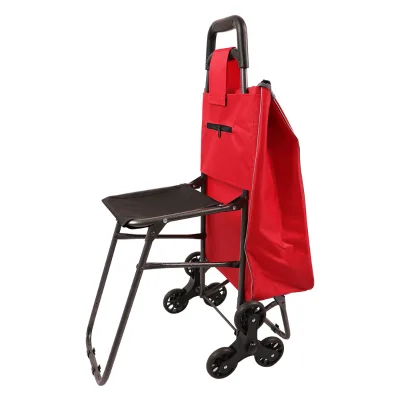
When sourcing a 70L powder-coated shopping cart with a child seat, buyers must first distinguish between general utility carts and specialized retail or family-oriented models. The core keyword implies a specific capacity and finish, yet the market data reveals a diverse landscape of variations. The product category generally encompasses wheeled shopping baskets designed for travel, supermarkets, and general shopping. The "70L" designation refers to the volume capacity, a critical metric for determining how much merchandise the unit can hold. However, observed market specifications show a wide range of capacities, including 60L, 80L, 100L, 125L, and 180L. This indicates that while 70L is a specific target, suppliers often offer modular sizing or slight variations around this figure.
The material composition is a primary differentiator. The supply chain for these units frequently utilizes aluminum and steel, with stainless steel also appearing as a specific material option in certain listings. The "powder coated" aspect of the query refers to the surface finish process. Observed data confirms that finishes can include zinc, powder coating, or chrome plating. This finish is essential for durability, corrosion resistance, and aesthetic appeal, particularly for carts used in wet environments like supermarkets or outdoor travel. The structural integrity often relies on a combination of these metals, ensuring the cart can support the weight of goods and a child without compromising the folding mechanism.
Dimensions are another vital specification. While the target is a 70L unit, observed standard dimensions for similar products range from 1010mm in length to 1350mm, with widths and heights varying accordingly (e.g., 540mm to 620mm width, 990mm to 1050mm height). Buyers must verify that the specific 70L model they select aligns with these dimensional constraints, as the physical footprint affects storage and transport logistics. The single package size for such units can be substantial, with some observed data indicating dimensions around 38x40x96 cm when folded or packed, which influences shipping costs and warehouse space requirements.
Technical Specifications and Functional Features
The functional design of a shopping cart with a child seat involves several technical considerations that go beyond simple capacity. The presence of a child seat is a non-negotiable feature for this specific keyword. Market observations confirm that models with a "Baby Seat" feature are available, often integrated into the frame design to ensure safety and stability. The type of shopping cart can vary from a standard wheeled basket to a "Herringbone Shopping Cart" or a "Children Shopping Cart," suggesting that the frame geometry may differ to accommodate the seat.
The wheel system is a critical technical component. The wheels must be robust enough to handle various terrains, from smooth supermarket floors to uneven outdoor paths. Observed data indicates that wheels can be made of TPR (Thermoplastic Rubber) or TPU (Thermoplastic Polyurethane), or other materials. A key feature in this category is the replaceability of wheels; the product attributes suggest that wheels can be replaced and customization is accepted. This is vital for long-term maintenance, as worn-out wheels can compromise the cart's usability. Furthermore, the folding mechanism is a standard attribute, with products described as "Folding" and capable of transitioning between unfolded and folded states. The folded state significantly reduces the volume for storage and shipping, which is a major cost driver in international procurement.
The handle configuration is another technical detail. Most observed models feature a single handle, which is standard for one-person operation. However, the customization of the handle allows for branding opportunities, such as printing logos directly on the handle. The capacity of 70L is often achieved through a wire or mesh basket design, which allows for visibility of contents and reduces overall weight. The "Waterproof" feature is also noted in the product attributes, suggesting that the materials and coatings are resistant to moisture, which is essential for carts used in outdoor markets or during rainy weather. The absence of heat preservation is a standard characteristic, clarifying that these are not insulated coolers but rather open-air storage solutions.
Compliance, Certification, and Safety Standards
Navigating the compliance landscape for shopping carts, especially those designed for children, requires a rigorous approach to certification and safety standards. The product data indicates that certifications are a common attribute ("have"), but it does not specify the exact type of certification (e.g., ISO, CE, ASTM). Buyers must verify that the specific 70L model with a child seat meets the safety regulations of the target market. For carts intended for children, structural integrity and the stability of the seat are paramount to prevent tipping or collapse.
The manufacturing standards vary by region. Observed data lists specific standard dimensions (e.g., 13505401050mm) and origins in regions like Hebei, Jiangsu, and Suzhou Changshu in China. These regions are known for manufacturing metal goods, but the specific quality standards applied can differ between factories. Buyers should request documentation proving that the cart meets relevant safety standards for children's products, such as weight limits for the seat and the strength of the folding joints. The "Condition" is listed as "New," which implies the products are manufactured to current standards, but this does not replace the need for third-party testing.
Surface printing and finishing processes, such as the use of stainless steel or powder coating, also have compliance implications. The finish must be non-toxic and free from sharp edges that could harm a child. The "Zinc, Powder or Chrome" finishes mentioned in the data must be applied in a way that ensures they do not flake or peel, which could create choking hazards. Additionally, the "Customized Logos" feature must be applied using inks or materials that are safe for contact, especially if the child might touch the logo area. Buyers should ensure that the supplier provides test reports for the materials used, particularly regarding heavy metals and chemical safety, to comply with regulations in the European Union, North America, or other target markets.
Cost Drivers and Pricing Dynamics
The pricing of a 70L powder-coated shopping cart with a child seat is influenced by several distinct factors. The observed price range in the market spans from $7.2 to $300 USD, a wide variance that reflects differences in material quality, customization levels, and order volume. The lower end of the spectrum likely represents basic models with minimal customization, while the higher end may include premium materials like stainless steel, complex folding mechanisms, or extensive branding.
Material costs are a primary driver. Carts made from aluminum and steel generally offer a balance of strength and weight, but stainless steel models may command a higher price due to the cost of the raw material and the complexity of the welding and finishing processes. The "Powder Coated" finish adds value through durability and aesthetics but also increases the manufacturing cost compared to unpainted or zinc-plated alternatives. The inclusion of a child seat adds to the complexity of the design, requiring additional structural reinforcement and potentially more material, which impacts the final unit price.
Order volume, represented by the Minimum Order Quantity (MOQ), significantly affects the unit cost. The observed MOQ range is 1 to 100 pieces, with a specific attribute noting an MOQ of 10 pieces for certain models. Buyers ordering small quantities (e.g., 1-10 units) will likely face higher per-unit costs due to the setup and handling fees associated with smaller batches. Conversely, ordering at the higher end of the MOQ range can negotiate better pricing. The "Customization" feature, such as adding a specific logo or color, often incurs additional setup fees and may increase the MOQ requirements.
Shipping and logistics are also critical cost components. The "Single gross weight" of 2.0 kg per unit and the "Single package size" of 38x40x96 cm mean that shipping costs are calculated based on volumetric weight as well as actual weight. The "Port of dispatch" varies, with options like Tianjin, Shanghai, and origins in Jiangsu or Hebei. Buyers must factor in the freight costs from these specific ports to their destination. The "Payment" terms, often requiring a 30% deposit and balance payment, also influence cash flow and financial planning.
Supplier Evaluation and Sourcing Strategy
Evaluating suppliers for this specific product requires a focus on their manufacturing capabilities, customization flexibility, and track record. The supply base includes manufacturers from Hebei, Jiangsu, and Suzhou Changshu, indicating a concentration of production in northern and eastern China. Buyers should verify the specific factory location to ensure it aligns with their logistical preferences and to assess the local supply chain ecosystem.
Customization is a key differentiator among suppliers. The data shows that "Acceptance of customization" is a common advantage, with options for "Customized Color," "Customized Logos," and even "Customized" model numbers. However, some listings also note "Non-Customized" options, suggesting that buyers must clearly communicate their requirements to avoid receiving standard models that do not meet their branding or functional needs. The ability to customize the wheel type (TPR, TPU, or other) and the handle design is a sign of a flexible supplier capable of meeting specific market demands.
The "Model Number" is another identifier for supplier capability. Observed models include A-2, YD-1008, and YD-1007. These specific model numbers can help buyers track the exact specifications of the product. A supplier that offers a range of model numbers with varying capacities (60L to 180L) demonstrates a broader production capacity and the ability to scale. Buyers should request samples of the specific model they intend to purchase to verify the quality of the powder coating, the stability of the child seat, and the smoothness of the folding mechanism.
Quality control is paramount when dealing with products that have safety implications. Buyers should inquire about the supplier's internal quality assurance processes. The "Condition: New" attribute is a baseline, but buyers should ask for details on the inspection process before shipment. The "Packaging Details," which include "Carton" and "Bubble Film," are essential for protecting the product during transit. A supplier that uses high-quality packaging demonstrates a commitment to delivering the product in pristine condition.
Quality Control and Long-Term Procurement Considerations
Ensuring the long-term viability of a procurement relationship for shopping carts involves rigorous quality control and an understanding of the product's lifecycle. The "Folded" and "Unfolded" states of the cart must be tested for durability. The folding mechanism is a common point of failure, and buyers should verify that the hinges and locking mechanisms can withstand repeated use without loosening or breaking. The "Wheel: Can be replaced" attribute is a positive sign for long-term maintenance, but the ease of replacement and the availability of spare parts should be confirmed.
The "Waterproof" feature is critical for the longevity of the cart, especially in outdoor or wet environments. Buyers should test the coating for resistance to chipping and peeling after exposure to moisture. The "Zinc, Powder or Chrome" finishes must be applied evenly to prevent rust formation, which can compromise the structural integrity of the cart over time. The "Single gross weight" of 2.0 kg suggests a lightweight design, but this must not come at the expense of strength. The cart should be able to support the maximum load capacity (70L) plus the weight of a child without deforming.
Long-term procurement considerations also include the scalability of the order. As demand grows, the supplier must be able to maintain consistent quality and delivery times. The "Lead time" is not explicitly stated in the data, but buyers should negotiate clear timelines based on the order volume and customization requirements. The "Payment" terms, such as the 30% deposit, should be structured to protect the buyer's interests while ensuring the supplier has the capital to produce the order.
Finally, the "Type of Shopping Cart" classification, such as "Herringbone" or "Children Shopping Cart," implies specific usage scenarios. Buyers should ensure that the cart is designed for the intended environment. For example, a cart used in a supermarket may require different wheel specifications than one used for travel. The "Usage" attributes of "Travel, shopping, supermarkets" suggest versatility, but the specific model selected should be optimized for the primary use case. By focusing on these quality and long-term factors, buyers can secure a reliable supply of 70L powder-coated shopping carts with child seats that meet their operational needs and safety standards.
FAQs
Can I customize the color and logo on the cart?
Yes, customization is available for both color and logos. You can select customized colors and have logos printed on the handle or surface. This option allows you to tailor the product to your brand requirements while maintaining the standard folding and wheeled features.
What is the capacity and size of the cart?
The cart offers capacities ranging from 60L to 180L, with specific models available at 40L or 70L depending on the configuration. The standard dimensions vary, with some models measuring around 1010mm in length and 620mm in width. You can choose from large, medium, or small sizes to fit your needs.
How is the child seat integrated into the design?
The cart includes a dedicated baby seat feature integrated into the frame. This design ensures stability and safety for children during use. The structure supports the seat while maintaining the folding capability and wheeled mobility required for travel and supermarket shopping.
What materials are used to construct the cart?
The cart is constructed from aluminum, steel, and stainless steel to ensure durability. The surface finish can be zinc, powder coated, or chrome plated for corrosion resistance. These materials provide a strong structure suitable for heavy loads while remaining lightweight for easy transport.
Are the wheels replaceable and what types are available?
Yes, the wheels can be replaced and customization is accepted for different types. You can choose from TPR, TPU, or other wheel materials based on your terrain requirements. This feature ensures long-term usability and allows for maintenance without replacing the entire unit.
What is the minimum order quantity for this product?
The minimum order quantity is typically 10 pieces, though some listings may allow orders as low as 1 unit. Bulk orders often benefit from better pricing and customization options. Buyers should verify the specific MOQ with the supplier before placing an order to ensure compliance.
Where are these carts manufactured and shipped from?
These carts are manufactured in regions such as Hebei, Jiangsu, and Suzhou Changshu in China. They are shipped from ports like Tianjin and Shanghai. The origin location affects lead times and shipping costs, so buyers should confirm the specific dispatch port for their order.